Capabilities

Machining strategies shaped by the drawing.

We select the process around geometry, material, quantity, critical dimensions and the records required with the order.

Discuss your project
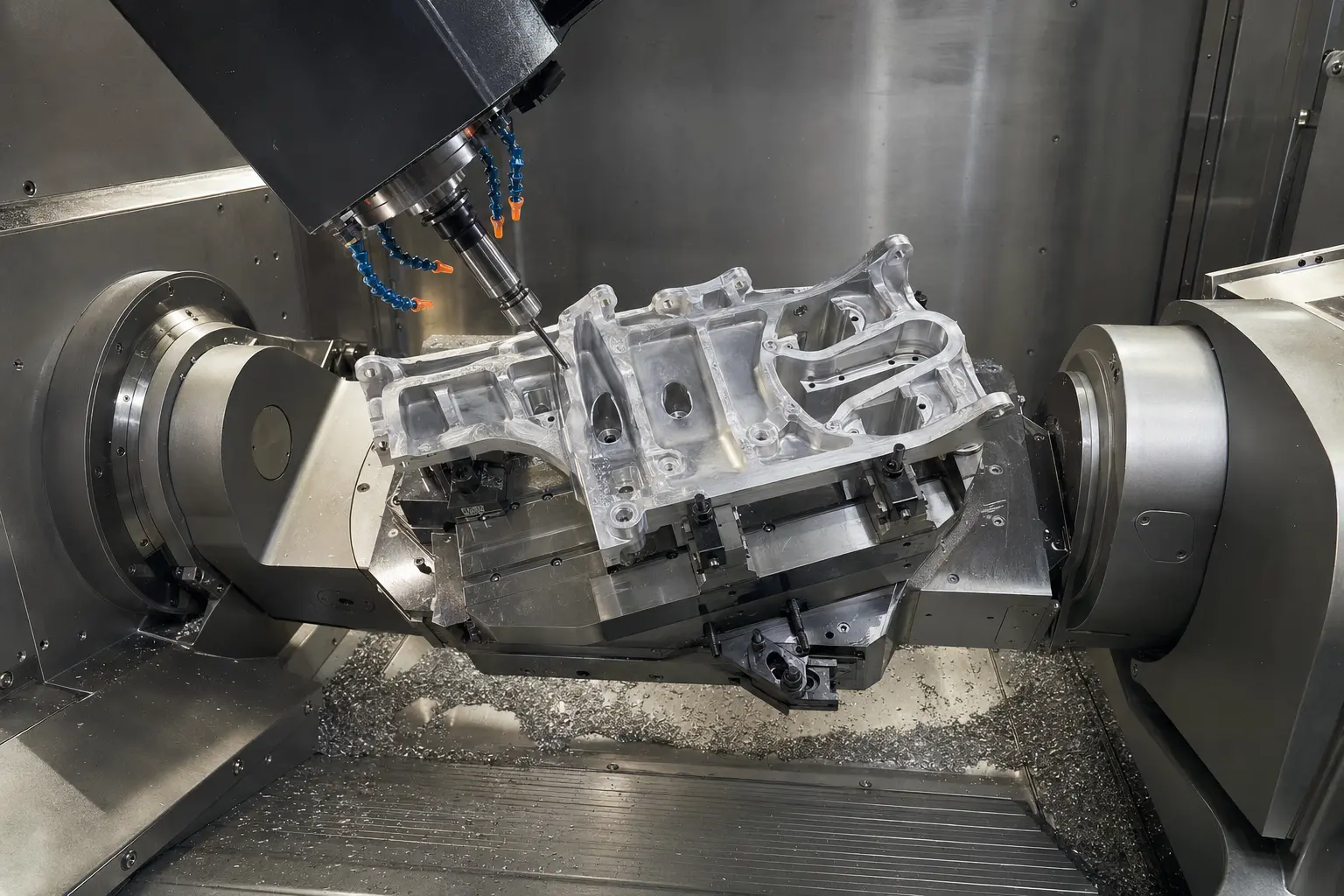
CNC machining operation inside a vertical machining centre
01 Capabilities

Primary processes

Four routes for custom precision parts.

The examples below explain where each process is useful. Final process selection follows a technical review of the supplied drawing.

5-Axis CNC Machining
01

01 / CNC PROCESS

5-Axis CNC Machining

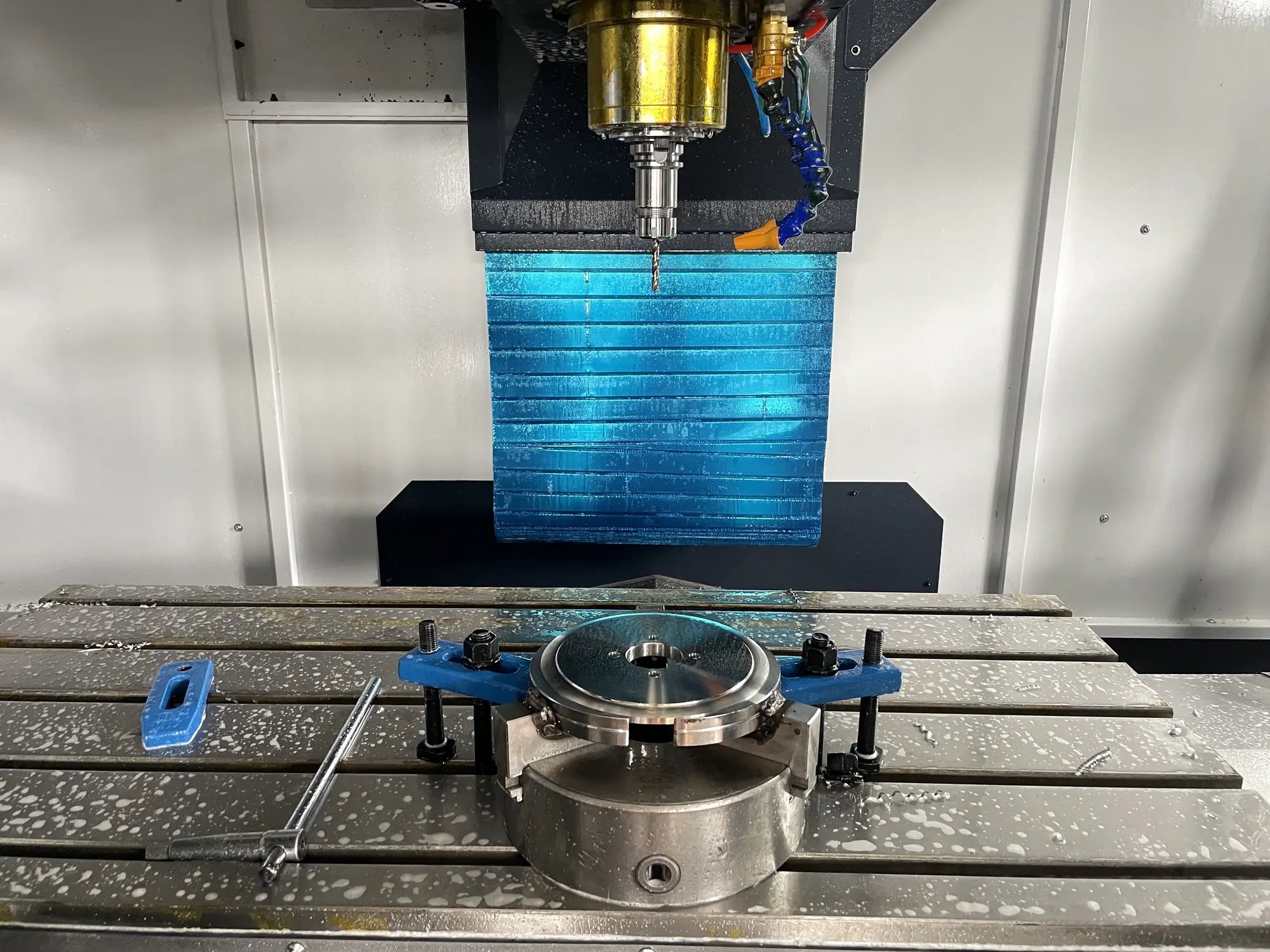
Five-axis positioning gives the cutting tool controlled access to multiple faces of a component. It is suited to complex geometry where datum relationships, surface continuity and reduced handling are important.

  • Sculpted surfaces and deep features
  • Multi-face housings
  • Complex aluminum structures
  • Prototype and repeat production
Precision CNC Milling
02

02 / CNC PROCESS

Precision CNC Milling

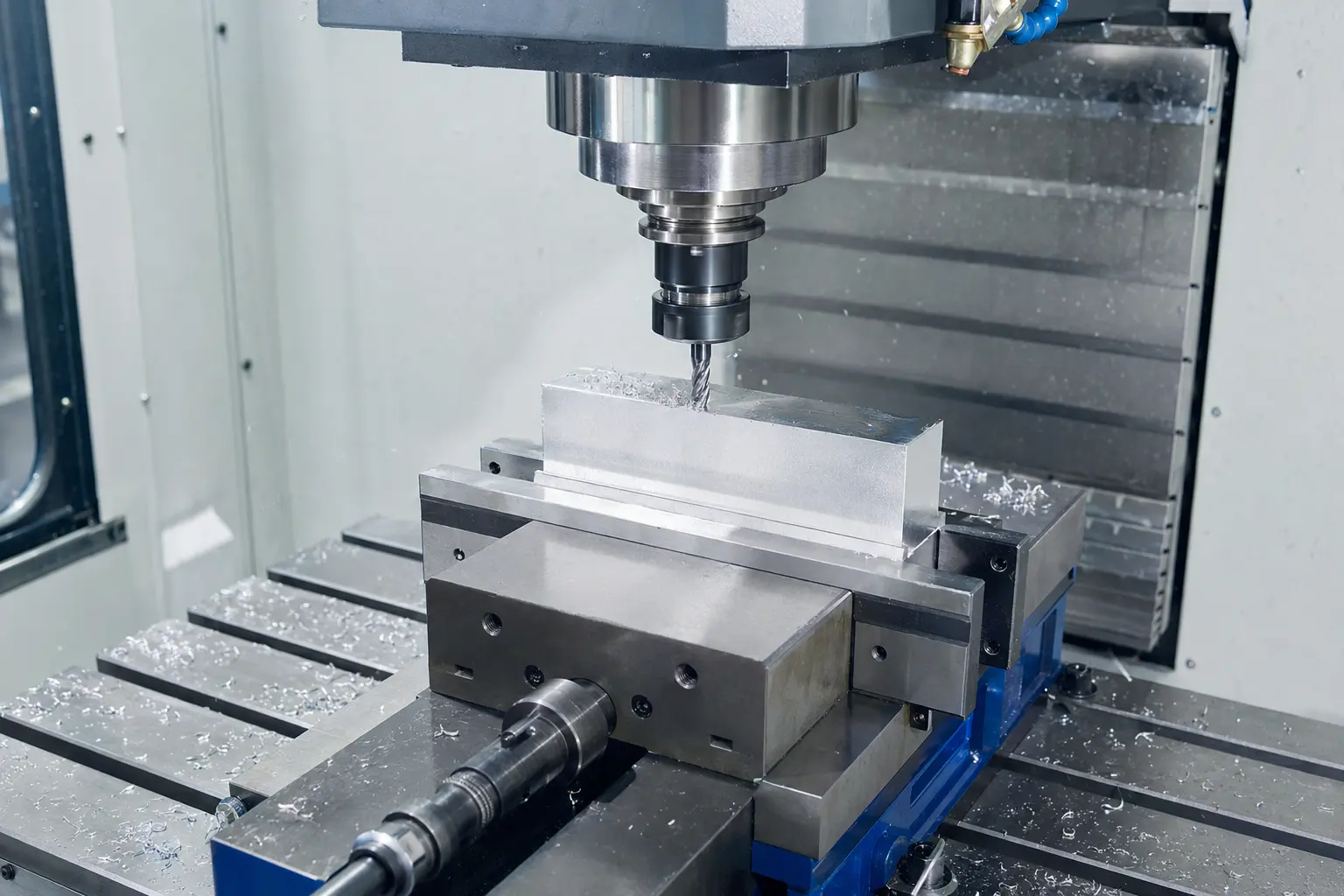
Vertical machining resources support prismatic parts with pockets, bores, threads, slots and datum-controlled features. Process planning is based on material, geometry, quantity and the drawing requirements.

  • Housings and manifolds
  • Fixtures and tooling
  • Brackets and plates
  • Engineering-plastic parts
Precision CNC Turning
03

03 / CNC PROCESS

Precision CNC Turning

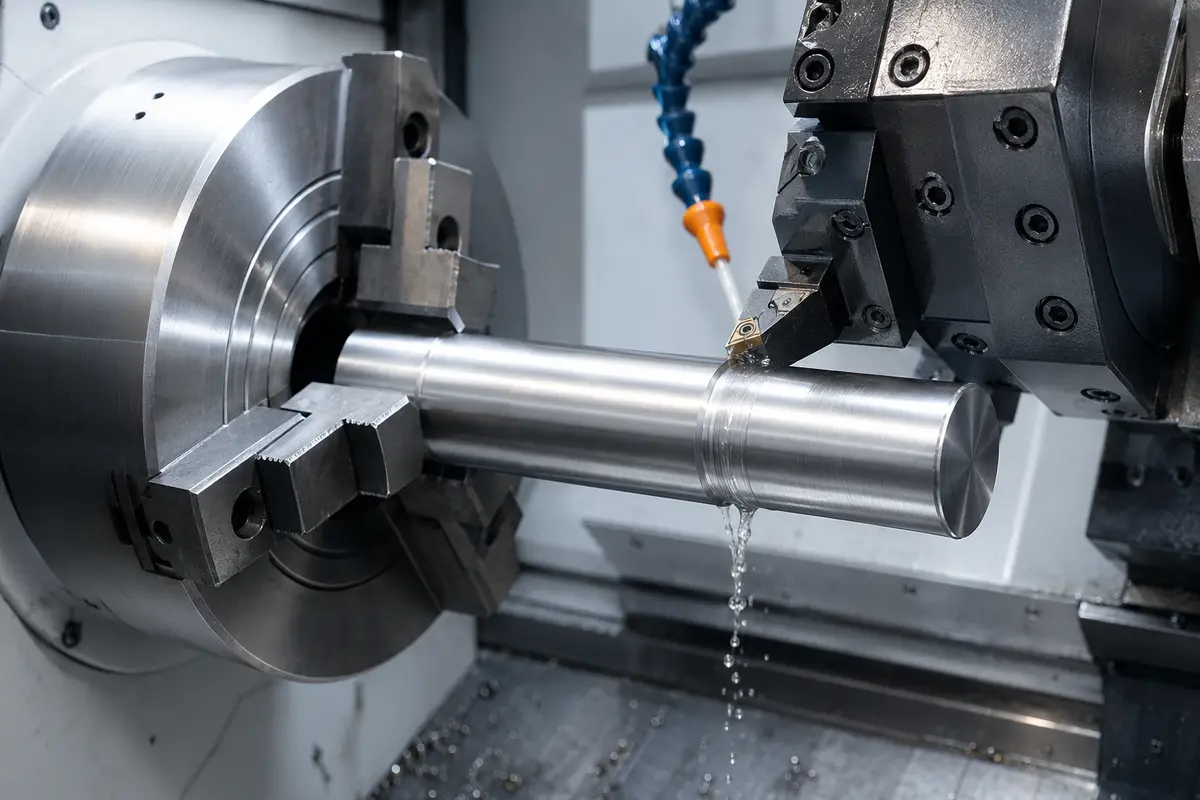
CNC turning supports external and internal diameters, threads, grooves, shoulders and bore features. Inspection points are defined around the functional dimensions of each rotational component.

  • Shafts and stepped shafts
  • Sleeves and bushings
  • Flanges and collars
  • Threaded components
Turn-Mill Machining
04

04 / CNC PROCESS

Turn-Mill Machining

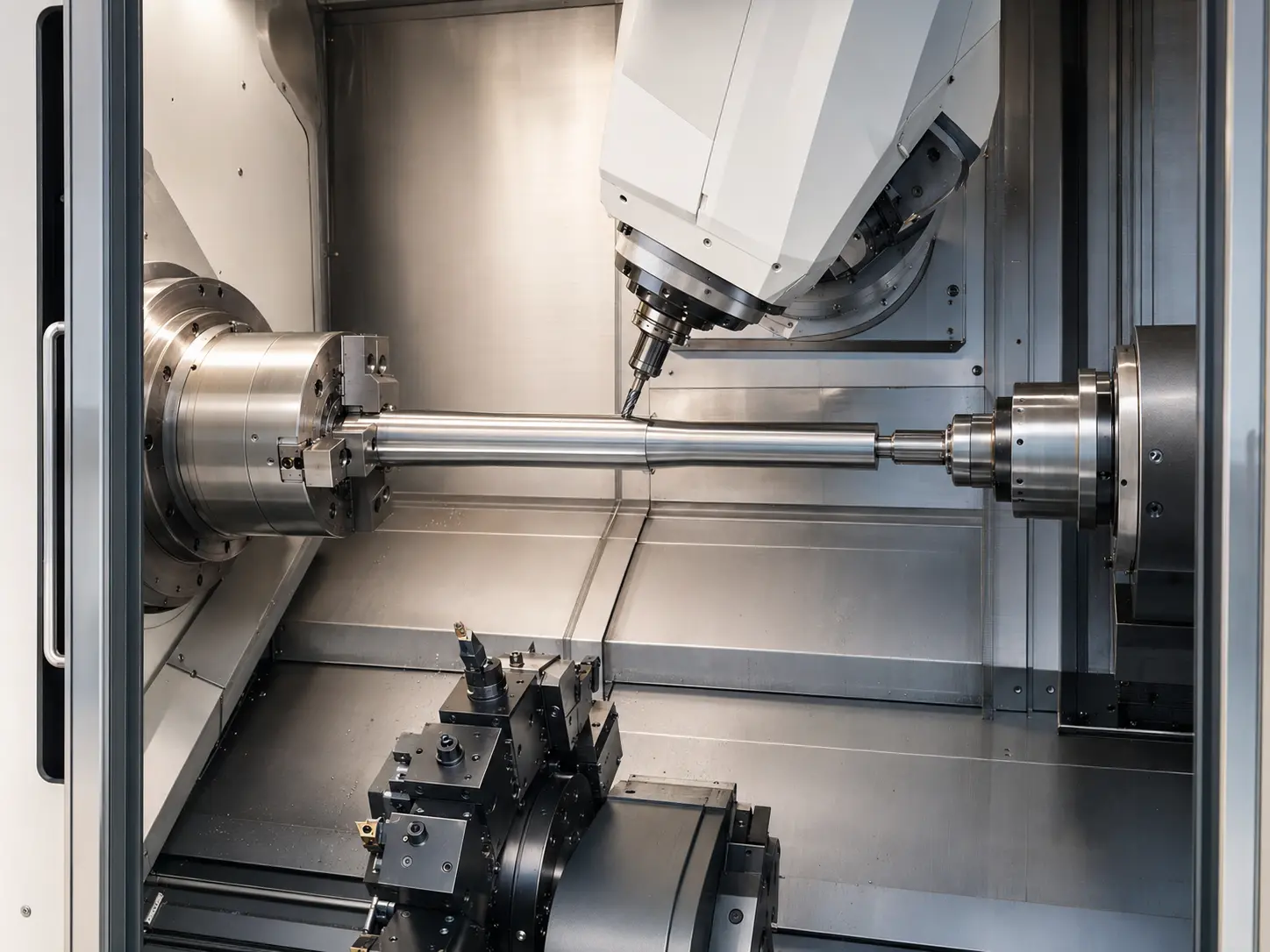
Combined turning and milling reduces transfers between operations and helps preserve the relationship between rotational and milled features. Suitability is confirmed after drawing review.

  • Complex rotational parts
  • Off-centre drilling
  • Milled flats and slots
  • Low-handling process routes

Materials

Common materials, confirmed by project.

Grade, condition, certification and substitute-material rules should be stated on the drawing or RFQ. Availability is checked before quotation.

Aluminum alloys

6061, 6063, 7075 and drawing-specified grades

Stainless steels

304, 316 and project-specified grades

Carbon & alloy steels

Machining grades confirmed by drawing and heat treatment

Copper alloys

Brass, bronze and selected copper grades

Engineering plastics

POM, PA, PTFE and project-specified materials

Special materials

Titanium and other materials subject to technical review

FINISHING

Anodizing, hard anodizing, passivation, black oxide, plating, heat treatment, polishing, bead blasting and marking can be reviewed as part of the production route.

Start an RFQ

The right process starts with the drawing.

Send the current revision and identify any critical-to-function features. We will review open points before preparing a quotation.